
Mimosa hostilis Inner Root Bark (MHRB)
Top Modern Uses of Mimosa Hostilis Root Bark
May
3 major uses of Mimosa Hostilis Root Bark
1. Exceptional Textile Dyeing
In the eco-friendly textile world, MHRB is celebrated as a legendary, high-yield natural dye source.
The bark’s high tannin content allows artisans to brew rich, permanent dye vats without using harsh synthetic chemicals. Depending on the fabric and preparation method, it creates beautiful shades of deep purple, amber, and crimson.
2. Holistic Skincare Formulations
In Mexico, the bark is famously called Tepezcohuite, which translates literally to “skin tree.”
Artisans finely mill the raw bark into a silky powder to utilize its natural soothing properties. This powder is frequently infused into premium organic soaps, restorative body salves, and protective face creams.
3. Laboratory and Botanical Research
Universities and independent laboratories frequently purchase raw Mimosa hostilis bark specimens for academic study.
Researchers analyze the bark’s complex molecular structure to expand global scientific understanding of native tropical plant profiles.
Choosing Your Material: Whole, Shredded, or Powder?
If you are sourcing this botanical for your own business or projects, you will find it in three standard cuts:
-
Whole Bark Strips: Unprocessed raw inner bark strips that perfectly preserve botanical freshness during long-term storage.
-
Coarse Shredded Fibers: Beautifully shredded strands that dramatically increase surface area for rapid, high-yield extractions and effortless liquid filtration.
-
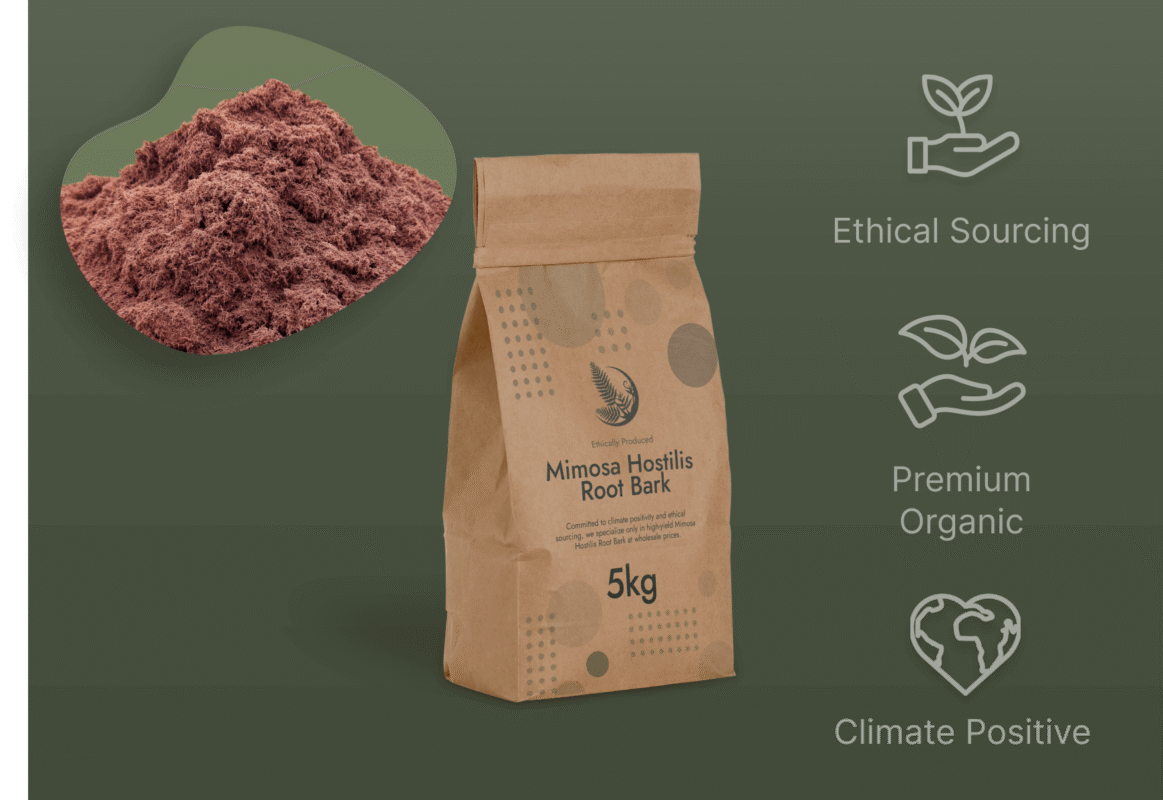
Ultra-Fine Milled Powder: A silky, easily dissolved powder that blends effortlessly into artisan cosmetic formulas and quick dye vats.
Why Ethical Sourcing Matters
Because global demand for Mimosa has skyrocketed, consumers must look closely at how their bark is gathered.
Many unethical industrial mass producers aggressively rip out entire root systems, which completely kills the tree.
Always look for a trusted supplier committed to regenerative harvesting. Ethical partners only harvest a single lateral root per plant. This advanced method ensures the tree continues thriving, growing, and reproducing for decades.
